
AI Market Watch: AI-Powered Trademark Monitoring Backed by Regional Expertise
By Victoria Rode, Head of Business Development and Leader of the Innovation Committee at Ojam IP
We are introducing an AI-powered trademark monitoring service run by our own team, combining technology with our experience in the region.
Today, the internet is where everything circulates, to the point that what does not appear online almost seems not to exist. Yet until recently, monitoring it broadly was within reach of only a few. The monitoring tools available on the market tend to focus solely on marketplaces, operate on monthly subscriptions, or require parameters and budgets that leave out a large share of companies.
For years, trademark monitoring in the digital marketplace was a manual task. Our team combed through marketplaces, online stores, social media, and ads looking for misuse, with valuable results that were nonetheless limited by the time it takes to review each channel.
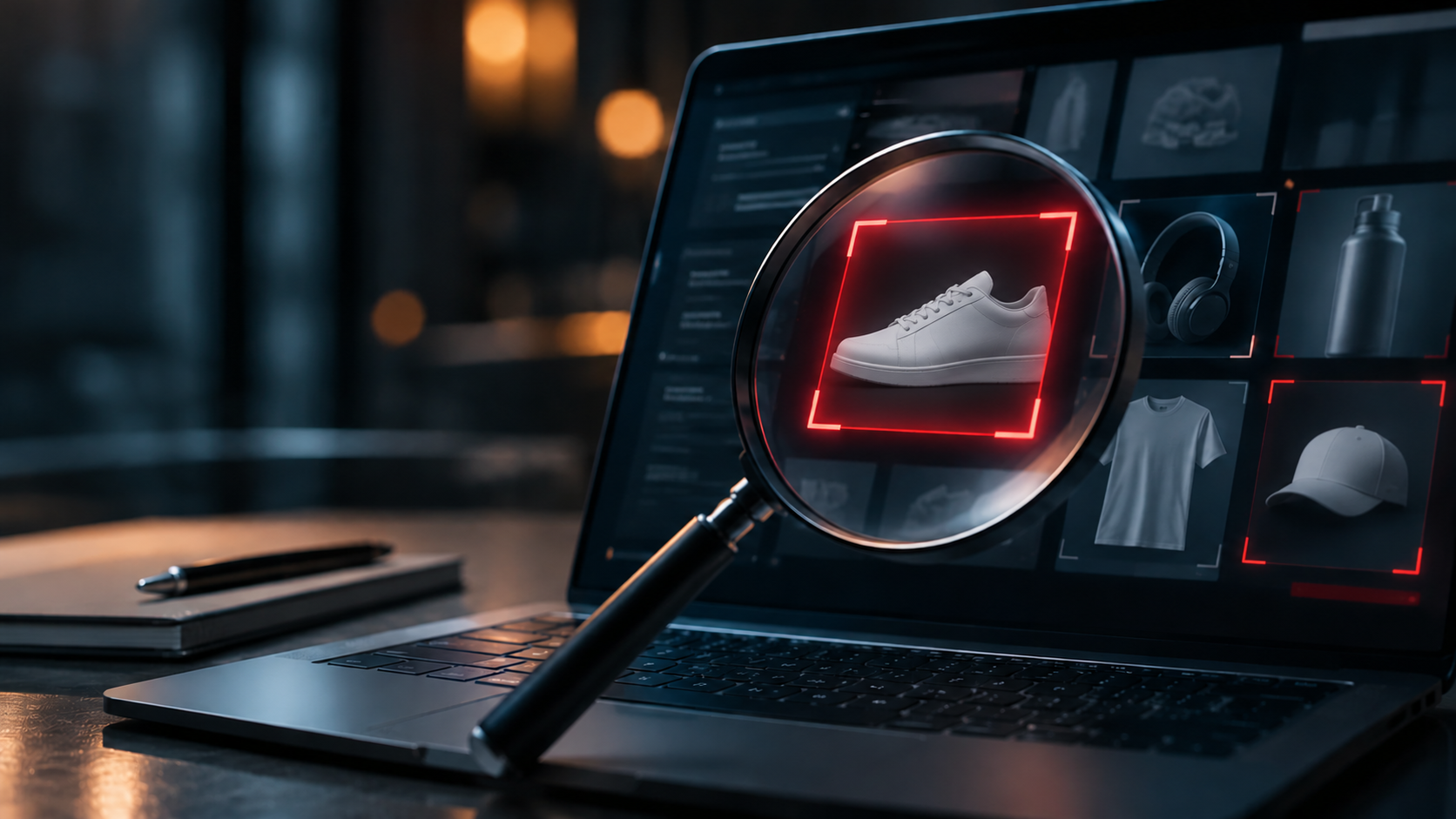
With AI Market Watch, we brought artificial intelligence into that work. We designed the service and run it ourselves, without outsourcing it to monitoring companies, and it allows us to search word marks by text and logos or designs by image. Every result is reviewed by an intellectual property specialist before it reaches the client.
AI Market Watch was born within our own team, from the initiative of one of our professionals. I highlight its origin because it reflects our work culture well, one in which every idea has the chance to be tested and, when it works, is refined and extended to the entire firm.
As an intellectual property firm, we are pioneers in offering a service of this kind, and I believe AI Market Watch breaks down the barriers of traditional tools. It brings monitoring within reach of many more companies, with a flexible format that adapts to each one’s needs.
Three Uses, One Sweep
While the tool is a single one, we see three clearly distinct applications.
The first, and most obvious, is detecting infringement and unauthorized use. Counterfeits, imitations, unauthorized sellers, or ads using the client’s mark are reported by priority, with a suggested course of action.
The second concerns generic use of the mark. When the market starts using a trademark to refer to the product in general, the risk of it losing its distinctiveness grows gradually and, often, without the owner noticing. Identifying those signals in time makes it possible to act before the situation becomes hard to reverse.
The third is market surveys as evidence. Knowing how trademarks are used in a given sector can provide meaningful support in a dispute, as well as input for other strategic decisions.
It is important to note that the sweep is limited to what is published online, so results depend on the channels that can be accessed and on how each listing is presented. For that reason, findings should be considered indicative.
In addition, every finding is analyzed by a specialist before it reaches the client. The specialist assesses the context of each listing and distinguishes infringing use from, for example, legitimate resale or a news article, so that the report reflects only the cases that truly require attention.
Why Regional Expertise Makes the Difference
Artificial intelligence allows us to survey, across multiple channels and countries at once, a volume of listings that would be impossible to cover through manual review. From the very first tests, the level of detail in the findings exceeded our expectations and made it possible to identify listings that could go unnoticed even by an experienced professional. However, what turns that volume into useful information is knowing where to look and how to interpret what comes up.
In that sense, the experience our team built by conducting these searches manually is what now defines the scope of each sweep. We know the channels that matter in each Latin American industry, as well as the local slang, nicknames, and spellings people use to refer to a brand, which often have little to do with its registered name. Added to this is our experience in intellectual property disputes and negotiations, which allows us to determine which findings have sufficient grounds for a claim and which strategy can deliver the best results in a negotiation.
Each report is tailored. The trademarks, countries, channels, and frequency are defined with the client, whether for a one-time sweep or for ongoing monitoring. The level of detail is also adapted to each case, from a complete list with links and sellers to only the highest-priority findings. Each finding includes a suggested next step, which may range from a message to the seller or a takedown request on the platform to a formal cease-and-desist letter or the evaluation of other measures.
Trademark Watch Before the INPI in a New Landscape
We apply the same approach to trademark watch before the INPI, Argentina’s trademark office. Every new application is checked against our clients’ marks by text and by image, including figurative marks. This is no minor point, since in Argentina figurative elements are not coded under an international standard such as the Vienna Classification. They are described in words, based on how the person viewing the image interprets it, and that description can vary from one person to another. As a result, a traditional keyword search may miss figurative marks that are in fact similar.
This watch has become even more important in recent months. Under Resolution P-583/2025, for applications filed on or after March 1, 2026, the INPI limits its examination to absolute grounds for refusal and to the existence of identical prior marks. It therefore no longer examines on its own initiative whether a new application is confusingly similar to a previously registered or filed mark. That assessment falls to the owner of the earlier mark, who has 30 days from the publication of the application to file an opposition. If they do not, the new mark may be granted even where there is a likelihood of confusion with theirs.
In practical terms, the new regime shifts much of the responsibility for protecting a trademark against later applications onto its owner. The INPI no longer acts as the first filter against similar signs, and a 30-day window leaves little room to detect the application, assess the risk, and prepare the opposition, especially considering that, since August 2026, all evidence must be submitted together with the opposition brief. In this context, trademark watch is no longer a complementary service and becomes the first line of defense for a trademark portfolio.
To see how AI Market Watch would work with your portfolio, we offer a free demo on one of your trademarks. For more information, please contact us at ip@ojamip.com.
Ojam IP · Where expertise meets evolution™
