
Argentina and the United States: The Agreement That Reopens the Debate on the Intellectual Property System
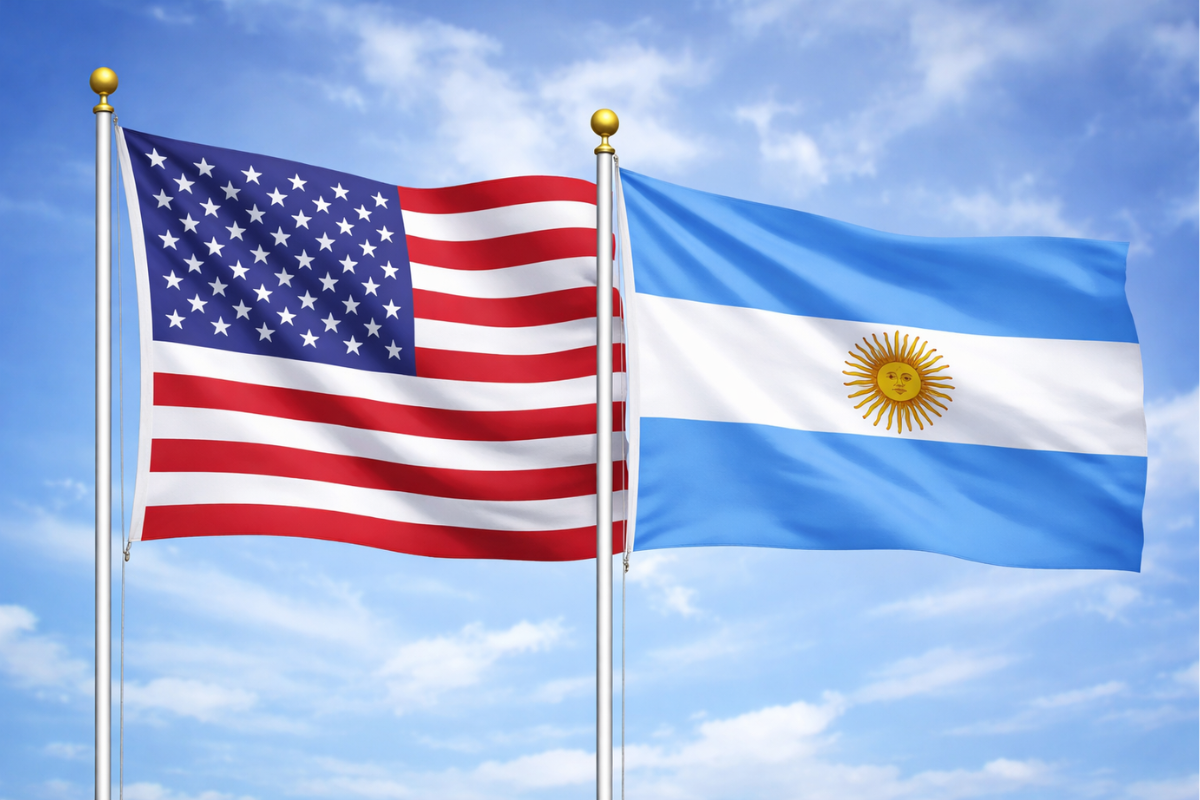
On February 5, 2026, Argentina and the United States signed the Reciprocal Trade and Investment Agreement. The instrument has not yet been approved by the Argentine Congress and therefore does not produce direct legal effects. However, its content allows us to anticipate a reform process that could structurally impact the local system.
Although the agreement introduces significant commercial commitments, for those of us working in intellectual property its regulatory dimension is particularly meaningful. The provisions relating to intellectual property and digital trade, if implemented, could drive a process of greater convergence between the Argentine system and comparative regulatory frameworks, and modify key aspects of its operation.
Below, we review the points we consider most relevant.
Patents: Projected Changes in Practice and the Regulatory Framework
One of the most sensitive chapters of the agreement concerns patents, particularly in the pharmaceutical and biotechnology sectors.
Argentina commits to introducing substantial modifications to the patentability criteria currently applied by the administration, which would entail the repeal of resolutions that in recent years established restrictive guidelines for certain categories of inventions.
It is important to clarify that the Patent Law itself would not be amended in its wording. The change would relate to administrative practice and the interpretative criteria applied during examination.
If these guidelines are effectively eliminated and not replaced by equivalent standards, patentability analysis would once again be governed exclusively by the law and by Argentina’s existing international commitments.
The agreement also provides for measures aimed at reducing the time required to process patent applications, as well as the preparation of a report to assess the feasibility of implementing patent term extensions in cases of unreasonable administrative delays.
Additionally, the agreement contemplates analyzing a regulatory data protection regime similar to that provided under the United States–Mexico–Canada Agreement. At present, Argentina does not have a system comparable to those jurisdictions.
Taken together, these commitments could result in a system more closely aligned with comparative practices and a more predictable regulatory environment for sectors where technological protection is decisive.
PCT and the Madrid Protocol: The Shift Toward Multilateral Registration Systems
The agreement establishes that the Executive Branch must submit the Patent Cooperation Treaty (PCT) to Congress before April 30, 2026.
Accession to the PCT would represent a significant shift in the way Argentina participates in the multilateral patent system. For foreign applicants, it would simplify the designation of Argentina within global filing strategies. For local actors, it would expand the tools available to project protection abroad.
In the trademark field, the commitment is similar: before the end of 2027, the Madrid Protocol relating to the International Registration of Marks must be submitted to Congress.
Incorporation into the Madrid system would modify the way foreign trademarks obtain protection in Argentina and, at the same time, provide local right holders with a simplified route to extend their registrations to other jurisdictions. This could translate into a greater volume of international designations taking effect in Argentina, as well as an increase in opposition and trademark defense activity.
Such a scenario would not only impact filing volumes, but also the way trademark protection is planned and coordinated at the regional and cross-border levels.
Beyond the PCT and the Madrid Protocol, the agreement provides for the submission to Congress of other relevant multilateral instruments, including the Budapest Treaty on the Deposit of Microorganisms, the Geneva Act of the Hague Agreement on Industrial Designs, the Patent Law Treaty (PLT), the Singapore Treaty on the Law of Trademarks, the 1991 Act of the UPOV Convention, and the Convention Relating to the Distribution of Programme-Carrying Signals Transmitted by Satellite. Taken together, these initiatives demonstrate that the projected process aims at a cross-cutting update of Argentina’s intellectual property framework.
Enforcement and Special 301: A More Explicit Commitment
One of the most noteworthy aspects of the agreement is the express incorporation of the U.S. Trade Representative’s Special 301 Report as a reference benchmark.
Argentina is currently included on the Priority Watch List, a category reserved for jurisdictions with significant concerns regarding the protection and enforcement of intellectual property rights.
The agreement transforms those observations into concrete commitments. These include:
- strengthening criminal sanctions,
- customs intervention even with respect to goods in transit,
- creation of institutional coordination mechanisms,
- actions against large-scale online piracy,
- periodic publication of enforcement statistics,
- potential reforms to the Criminal Code relating to technological protection measures.
The real impact of these reforms will depend not only on their formal adoption but also on their effective implementation and the allocation of adequate resources.
In a system where enforcement has historically been one of the most debated aspects, this chapter marks a turning point in discussions on how the protection of intangible assets will be structured in practice in the coming years.
Geographical Indications and Their Interaction with the Trademark System
The agreement also incorporates specific commitments regarding geographical indications.
It establishes requirements for transparent recognition procedures, opposition grounds based on prior trademarks, and criteria relating to the potential generic nature of certain terms.
It further provides that protection of a geographical indication must be supported by the effective existence of a quality or reputation attributable to its geographic origin, and promotes greater clarity regarding which components of compound denominations are protected.
In general terms, what is relevant is that the regime could become more structured and predictable, with more explicit rules governing its interaction with the trademark system.
Digital Trade and Data Transfers
The agreement is not limited to trade in goods. It includes commitments relating to digital trade, cross-border data transfers, and technological protection.
Among other points, Argentina commits not to impose customs duties on electronic transmissions, not to require the transfer of source code as a condition for market access, and to recognize the United States as providing an adequate level of personal data protection.
The agreement also contemplates cooperation in cybersecurity and recognition of electronic signatures.
For technology companies and digital service providers relying on infrastructure located in the United States, these provisions may reduce regulatory uncertainty and facilitate cross-border operations.
Sectors with Greater Exposure to the Projected Changes
If the agreement advances in its implementation, certain sectors could experience more immediate effects:
- pharmaceutical and biotechnology,
- seeds and plant varieties if UPOV 1991 is ratified,
- automotive, in light of tariff reductions,
- mining and critical minerals,
- digital economy and technology-based services.
In all of these sectors, the protection and strategic management of intangible assets is often central to investment decisions.
In a context where the knowledge economy and intangible assets play a central role in global trade, the way this new regulatory framework is structured becomes a strategic factor.
Speaking of opportunities does not imply assuming outcomes. It means recognizing that greater regulatory compatibility may influence how global companies assess jurisdictions when designing their regional strategies.
The Challenge of Implementation
As noted, the agreement does not produce direct legal effects until it is approved by Congress and enters into force. Its concrete impact will depend on how the commitments undertaken are regulated and implemented.
Nevertheless, the text clearly outlines the types of reforms being pursued: revision of administrative practices, strengthening of enforcement mechanisms, and updating of the regulatory framework in line with standards that today shape a significant portion of global trade and the protection of intangible assets.
For those of us working in intellectual property, this requires ongoing monitoring and a strategic reading of each legislative and regulatory step adopted in the coming months.
Beyond the political or economic debate surrounding the agreement, from a legal perspective the underlying question is how the Argentine system will be configured in the coming years and what role it will play within the global framework for the protection of intangible assets.
The potential incorporation into multilateral treaties and standards is not a new discussion. For years, it has been a recurring topic in conferences, panels, and professional forums, where Argentina’s integration into key multilateral instruments has regularly surfaced. What this agreement introduces is a change in scale: that conversation moves from being primarily academic or sectoral to becoming part of a concrete institutional commitment.
In that sense, the agreement sends a message that goes beyond the local community. It is being observed by colleagues, firms, and companies in different jurisdictions that assess Argentina’s positioning within their regional strategies.
There will undoubtedly be challenges and adjustments. But there will also be a process of redefinition that goes beyond the strictly local and once again places the Argentine intellectual property system at the center of a broader international conversation.
For further information please contact ip@ojamip.com
